Older surveys can still contain useful information. A fresh, documented review can test prior interpretations against additional data and current exploration questions.
We assess original observations, grids, acquisition reports, processing history, coordinate reference and coverage. The quality and completeness of the source package determine which new products or comparisons can be defended.
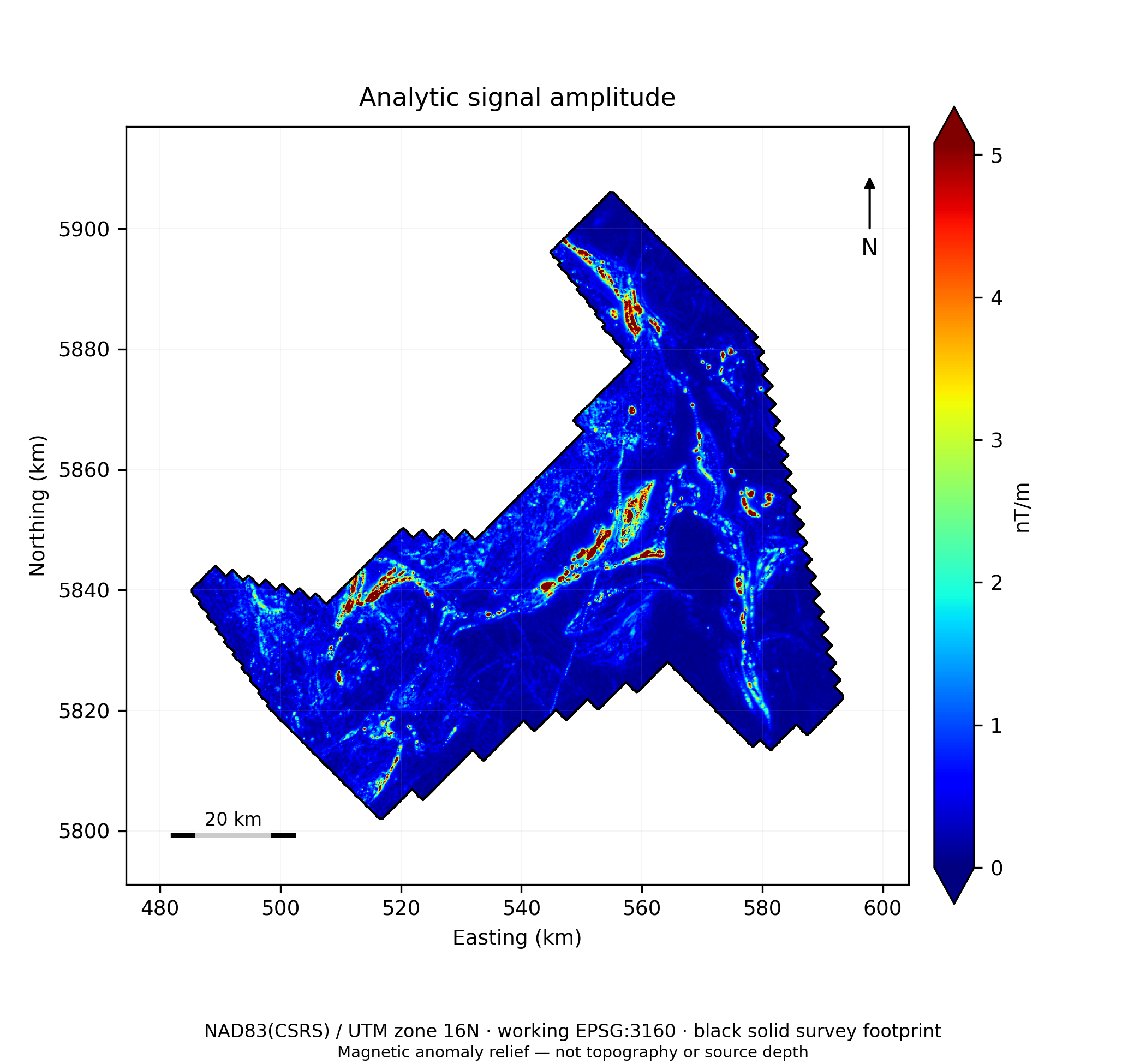
Figure 8. Analytic signal amplitude. Source: Ring of Fire interpretation report, reviewer revision, 28 September 2026. Preliminary interpretation.
Figure 4. Reduced-to-pole magnetic response. Source: Ring of Fire interpretation report, reviewer revision, 28 September 2026. Preliminary interpretation.
EVIDENCE 02
Revisit old conclusions
Compare magnetic features with geology, gravity, drilling and known occurrences. Where appropriate, the team can look for overlooked subfeatures, changed geological context and alternative explanations for earlier targets.
EVIDENCE 03
Choose the depth of review
A rapid screening can organize questions for a technical meeting. A deeper assignment can document processing, evidence by target, uncertainty and a proposed field or survey program. Any formal inversion requires verified observations and appropriate physics, rather than a map image alone.
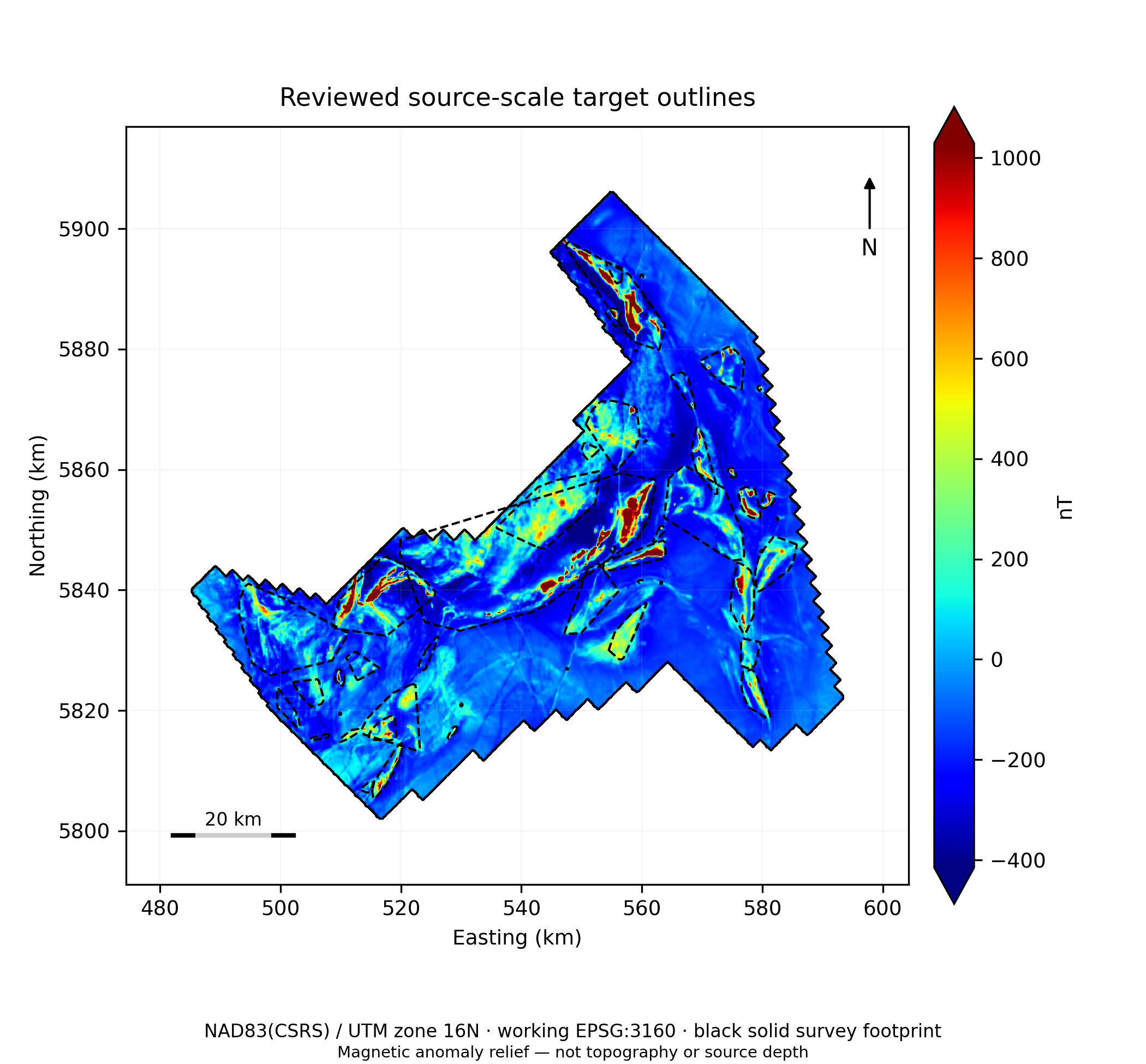
Figure 21. Reviewed source-scale target outlines. Source: Ring of Fire interpretation report, reviewer revision, 28 September 2026. Preliminary interpretation.
What the team can use
Extract more value from data already acquired
Validate, refine or challenge earlier target hypotheses
Identify the next dataset most likely to resolve uncertainty
Discuss the evidence with us
The figures above are preliminary public-data examples, not mineral-resource estimates or drilling instructions.