Bring drawing requirements into a transparent cost picture
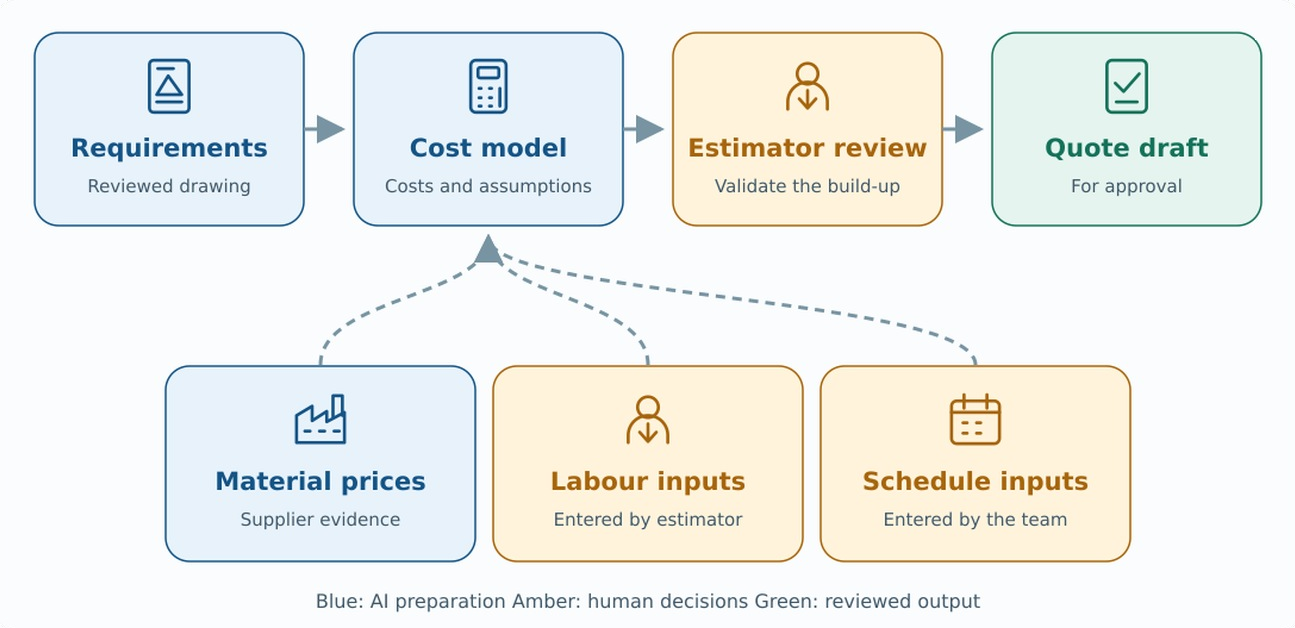
AI helps organize what the drawing says and what remains uncertain. Supplier prices and estimator-entered labour and schedule inputs come together in a draft cost model for review.
Figure 3. Drawing requirements and supplier prices combine with manual labour and scheduling inputs. AI assembles the model; the estimator checks its assumptions before the quote moves to approval.
01
Read the drawing in context
Capture revision, quantity, material, finish, tolerances and notes alongside their source attachments. Ambiguous features or missing specifications become clarification items for an experienced reviewer. The workflow records confirmed values and unresolved questions.
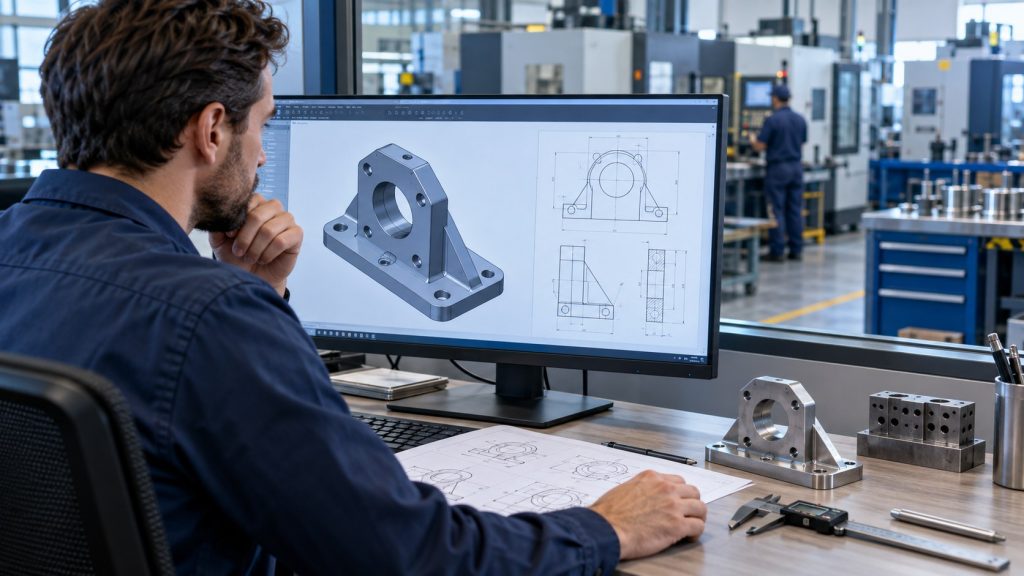
Illustrative CAD review with a physical machined component. Geometry and drawing annotations provide context for estimation; the image is conceptual and is not a production drawing.
02
Keep labour and capacity with the estimator
In the initial workflow, staff enter setup hours, run-time estimates, programming and inspection time, margin or contingency, feasible delivery date and scheduling risk. AI organizes these inputs and highlights gaps. It does not calculate machine capacity or commit the shop to a schedule.
03
Preserve the reasoning behind the number
Record supplier evidence, input author, timestamps, assumptions and approval comments with the cost build-up. This creates a useful foundation for later comparison of quoted and actual work and for future system integration.