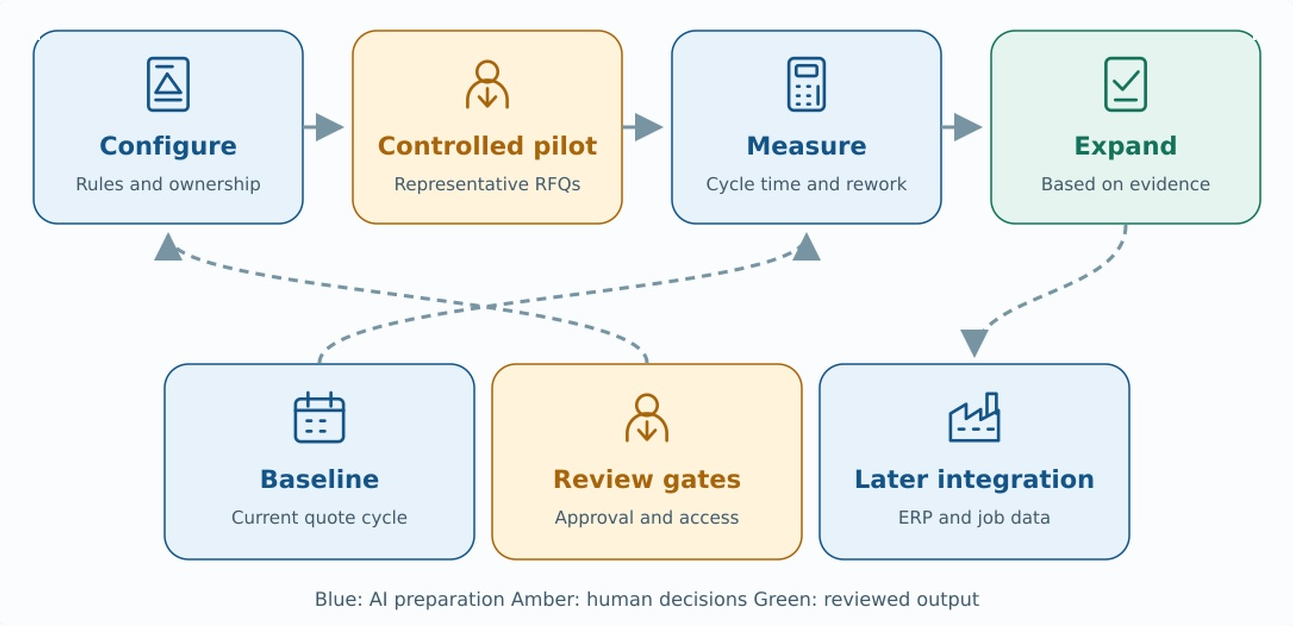
Start with a focused implementation that reflects your shop’s rules. Test representative requests, measure the operational change and expand when the evidence supports it.
Figure 5. Establish a baseline and approval rules, test the workflow with the quoting team, and measure results. ERP, scheduling and inventory integration are later options after validation.
01
Configure the operating rules
Map RFQ intake, supplier sources, manual costing fields, approval roles and communication permissions. Define the information AI may use and the actions it may prepare. Confirm the workflow with the people who estimate, purchase and approve.
02
Test with live work
Compare extracted requirements with drawings and revisions. Test customer clarifications, supplier requests, returned responses and approval handoffs. Include incomplete RFQs and revision changes so the pilot exposes exceptions as well as normal work.
Illustrative pilot review. Estimators and managers compare outputs with real RFQs and refine the workflow before extending its scope.
03
Measure the outcome
Track cycle time, touches per quote, clarification turnaround, supplier response time, rework and approval turnaround. Record quote win or loss. Compare quote-to-actual variance when job outcomes become available. Expected benefits remain hypotheses until measured.
04
Create a path to later integration
The initial workflow can operate with manual labour and schedule inputs. ERP, inventory, job scheduling and approved subcontractor data can be considered after the core process is validated. Scope, access and data quality determine each integration.